Review: NOMAD’s ChargeCard & ChargeKey

photo 1

In the ever-evolving, technology-run world that we live in today, running out of battery is a big worry for most people. But fear no more, NOMAD has got you covered.

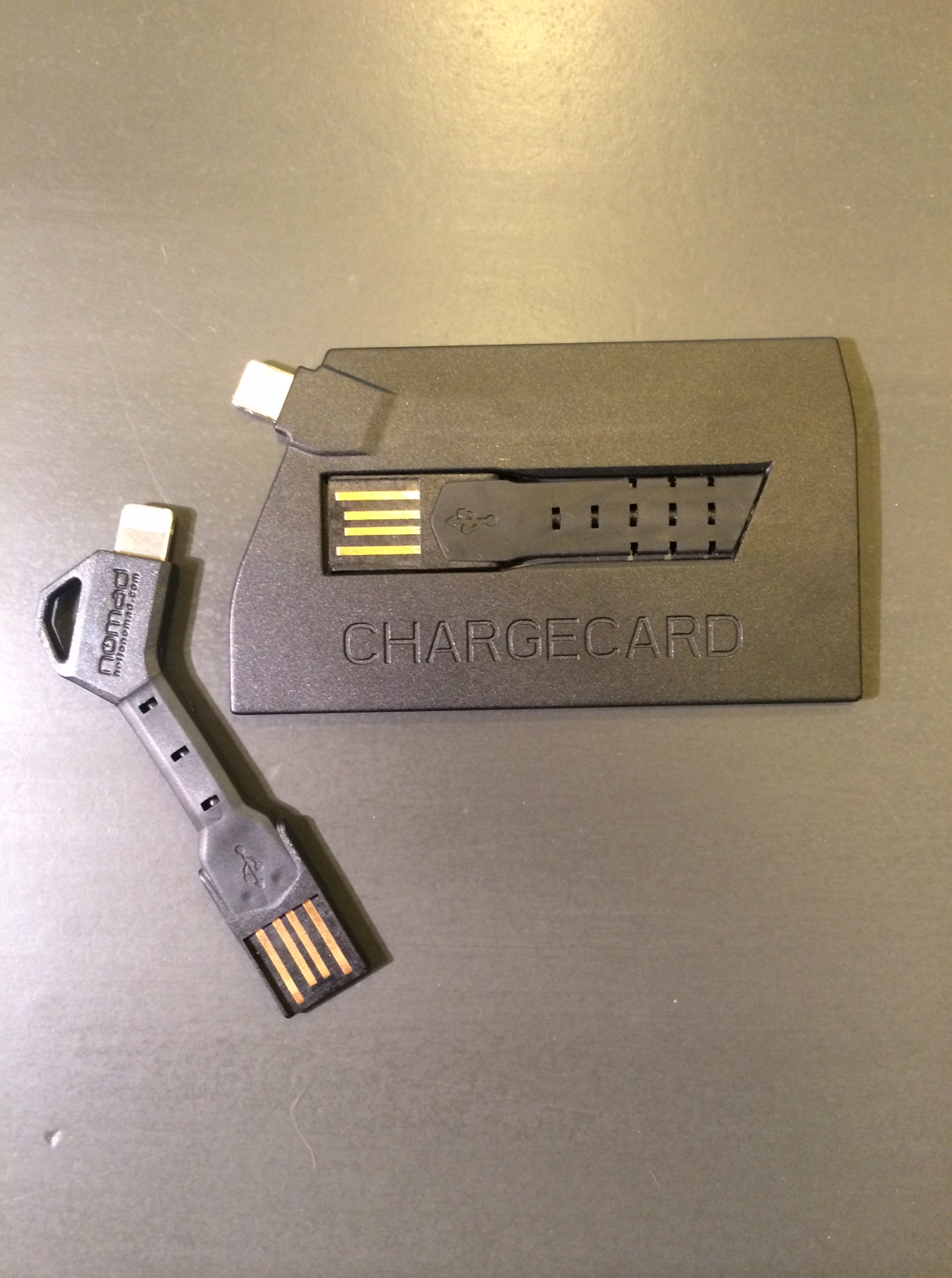
NOMAD Goods recently announced their two new products, the ChargeCard & ChargeKey. Both of which are super small USB chargers that will make sure you are never without a charging cord for your smartphone or tablet.

photo 4

The ChargeCard is a credit card-inspired USB charger that is thin enough to fit inside your wallet. The ingenious slide-out-USB design allows for easy access to a charging cord no matter where you are.

The ChargeKey, being the most recent addition to the NOMAD line of products, is shaped exactly how you would picture it, like a key. The key-inspired design can conveniently attach to a key ring, which makes the ChargeKey ultra-portable, coming in at just 2.5 inches long. Another key feature of the ChargeKey is it’s ability to effortlessly bend up or down to fit any charging position’s needs.

photo 2

One thing that I felt was lacking when using the ChargeCard or ChargeKey to charge your smartphone, it is very awkward and nearly unable to use the phone while plugged in due to the compact design of the ChargeCard/ChargeKey. Perhaps this will be fixed in the coming versions by adding a cord that can extend to allow for more comfortable usability while charging.

Overall, both the ChargeKey and the ChargeCard are terrifically designed and innovated accessories that change the way you think about and charge your phone. I found myself not even needing to bring charging cables on long trips, as I just used ChargeCard or ChargeKey whenever I needed to, wherever I needed to.

photo 3

Just coming in at $25 for each, the ChargeCard or ChargeKey will perfectly compliment your iPhone or other USB-enabled smartphone. You can read more about and also purchase the ChargeCard or ChargeKey at NOMAD’s website here.

Review: Lunatik Flack Jacket for iPad Mini

Flak Jacket

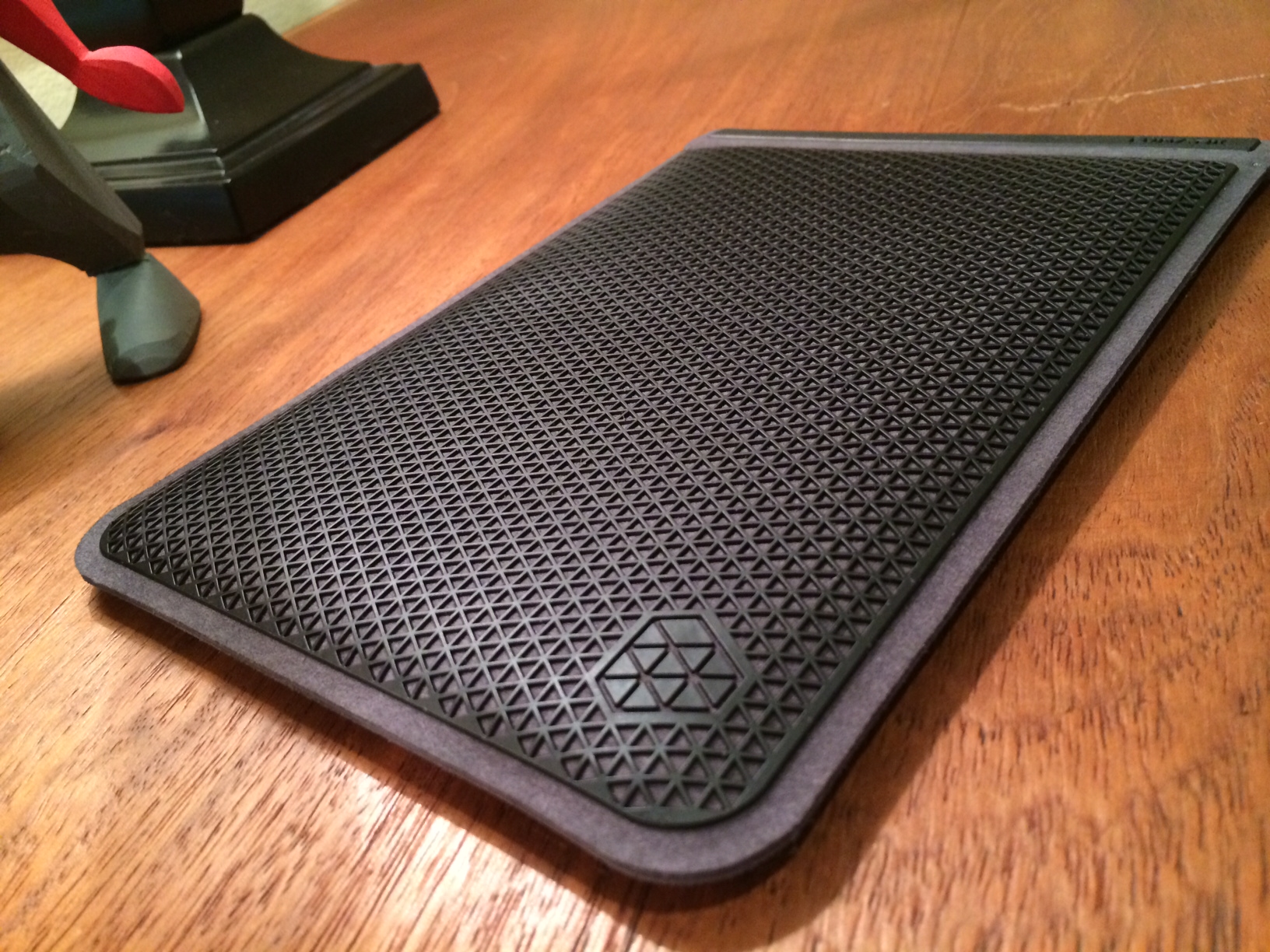
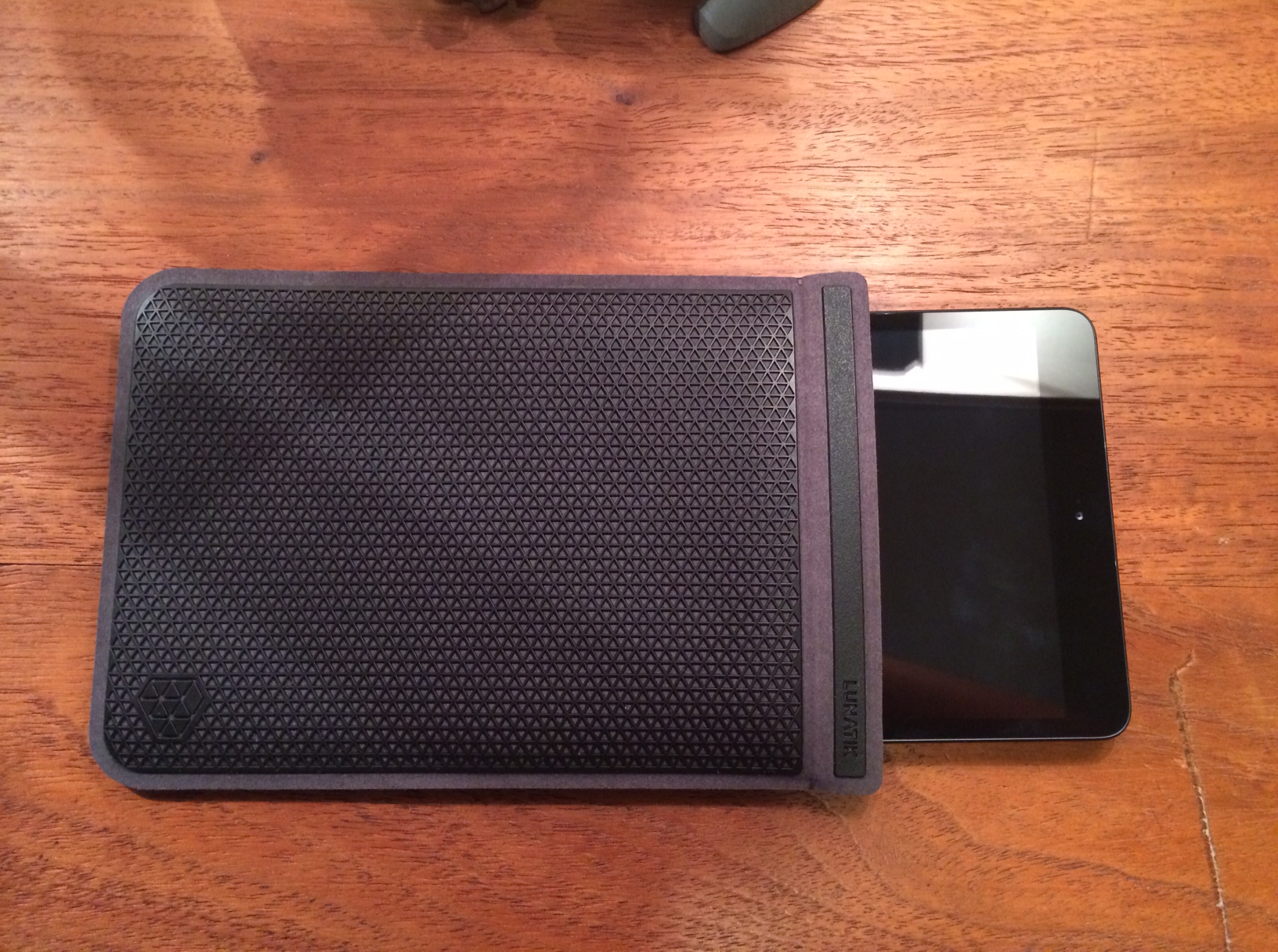
Whenever I go on trips, whether it be all the way across the country or to the grocery store, I always bring my iPad Mini. If you are a person that brings their Apple tablet everywhere, then you have already have a jacket or cover… but now you may want to take a hard look at your previous purchases because Lunatik has just introduced a great new productive iPad Mini sleeve, The Lunatik Flak Jacket.

The Flak Jacket is a lightweight sleeve for iPad Mini that is made out of a protective three-dimensional polyurethane, that is commonly used in footwear and performance outerwear. It is available in three different colors – dark black, cool mint, or bright pink. The Flak Jacket is extremely well-designed to provide top-notch protection against impact and abrasion resistance. Inside the Flak Jacket sleeve, microfiber lines the interior which cradles the iPad Mini with a super soft, snug fit.

My favorite thing about the Flak Jacket sleeve for iPad Mini is not only the protection it adds, but that it allows me to use my iPad naked (without a case), yet still offer me protection when transporting my device. This way, I can fully enjoy my iPad and it’s incredible design as Apple intended.

photo 3

Another thing that makes the Flak Jacket special is the neat addition of a magnet, which allows for an easy open/close and is definitely an upgrade over other cases which use velcro or elastics. Also, the Flak Jacket is iPad Smart Cover friendly – which means that there is no need for you to take your Apple Smart Cover off your Mini when putting it in the Flak Jacket, the Mini, Smart Cover-and-all will fit into the sleeve no problem.

All in all, the Flak Jacket, in my opinion, is one of the best cases for the iPad Mini I have seen so far and it would make a perfect holiday gift for you or a loved one coming in at just $49. The durable and hard, yet flexible, outside paired with soft and cushiony inside protect your iPad Mini without any added bulk.

lunatik_original_slideshow_960x540_ia_131004_FLAKJACKIT__Detailshot2_black.slide

The Lunatik Flak Jacket also fits perfectly for the Kindle Fire HD/X, Nexus 7, Nook HD, as well as the Galaxy Tab 2 & 3.

You can read more about and purchase the Flak Jacket for iPad Mini on Lunatik’s website.

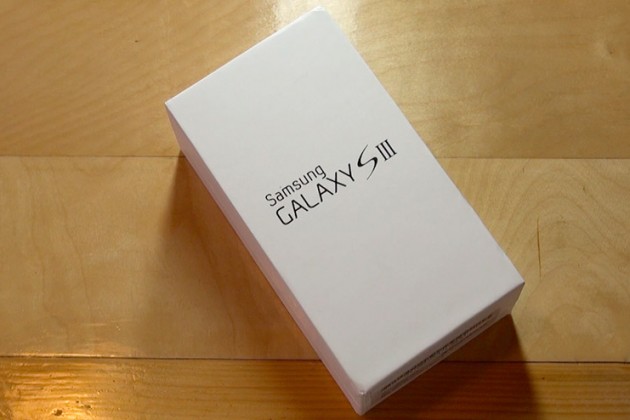
Quick Review: Samsung Galaxy S III for Verizon Wireless

Considering its predecessor, the Galaxy S II, sold millions upon millions of units, a lot of expectations have been mounted on Samsung’s shoulders for this quad-core smartphone. Is it really worth all the hype? How does it perform in everyday life? You can find out about all of this and more in my review of the Samsung Galaxy S II for Verizon Wireless.

 —-

Specs

– Screen: 4.8″ 720×1280
– Processor: 1.4 GHz quad-core Exynos
– Storage: 16GB/32GB/64GB, Up to 64GB SD card support
– Camera: 8-MP rear camera with LED flash, 1.9MP front-facing camera
– Connectivity: HSPA/3G, Wi-Fi 80.211b/g/n, Bluetooth 4.0, DLNA, A-GPS, GLONASS, NFC, Wi-Fi Direct, USB On The Go
– Ports: microUSB (MHL compatible), 3.5mm headphones
– Battery: 2100mAh, removable
– Price: $200 ($599 for full-retail)

What is it?

It’s the smartphone that was designed to put every other Android phone in the dust. It’s got a huge HD display with next-gen screen technology; Samsung’s new quad-core Exynos processor chip, and a bunch of new software; including this really cool eye-tracking ability to change the screens brightness!

Who’s It For?

This phone was built for a broad range of people, everyone from Android enthusiasts, to the people who still use a typewriter, all the way to the Apple Fanboys.

Design

There are many people who are just sold on the phone because they owned a previous Galaxy S device, as well as some people who don’t know anything about the phone but like the largeness of the device. That’s great, but what about the design and the feel of the device? Will it fit in your pocket? Ladies, what about your little clutch purse?

The new HyperGlaze polycarbonate chassis feels very cheap, nothing like the high-end smartphone as Samsung advertises. While it may be pretty to look at, it make’s the SIII feel very fragile, almost like a child’s toy.

The camera-button has lost it’s previous location, and now the the volume button placement makes it slightly tricky to activate the lock key on the other side.

However, while first impressions will be mixed, the build quality of the Galaxy S III is excellent. When the Galaxy SIII was unveiled, Samsung states that they created the new smartphone to resemble the Earth. The toughened glass front feels very solid when stroked and prodded, and the beautiful design of the chassis fits very well in the palm – very much like a pebble, thanks to the rounded edges.

Plus, on the back side of the device, there’s a compartment for a removable SD card, so smartphone users can further personalize their experience.

Using It

Samsung has changed the UI of the Galaxy S II (TouchWiz) a little bit, adding re-sizeable widgets and some brand new widgets like a brand new brightness toggle in the notifications tray.

The camera is very strong. It uses a very similar sensor as seen in the S II, and while the software optimisation has made it super quick and added in some key features, camera lovers might not want to use this as their daily camera of choice.

But overall, the phone just works. There’s no more lagging when flipping through the homescreens, playing games, or watching movies, like I experienced with the Galaxy S II. (My review here.)

Highlights

The Super AMOLED screen offers terrific sharpness and vivid colors when viewing pictures, movies, or playing games! Samsung has been known for there very vivid TV screens and they seem to have brought the best of their television screens to the new Galaxy S III.

Again, the Samsung Galaxy S was very fast, and I experienced no lag during my two weeks of testing.

Lowlights

The only real issue I have with the Galaxy S III is the design. If I am paying $200 ($599 for full-retail) I want my smartphone to feel like an expensive, solid device, not like a child’s toy.

Overall

Should you buy it? If you haven’t bought a new smartphone since 2010, and are looking for an Android phone, yes. But, if you are still on the edge about buying it, I would wait until the new iPhone (5th generation) comes out, and compare the two.

Get past the design and you’re looking at one of 2012’s leading smartphones: crazy powerful, with a beautiful screen, and more storage than an average USB stick.

It’s not perfect (I haven’t seen any phones this year hit that bar) but it’s very, very close… and it will probably be enough to entice those that simply can’t bear the thought of waiting until October to pick up the iPhone 5.

You can read more about and purchase the Samsung Galaxy S III here.

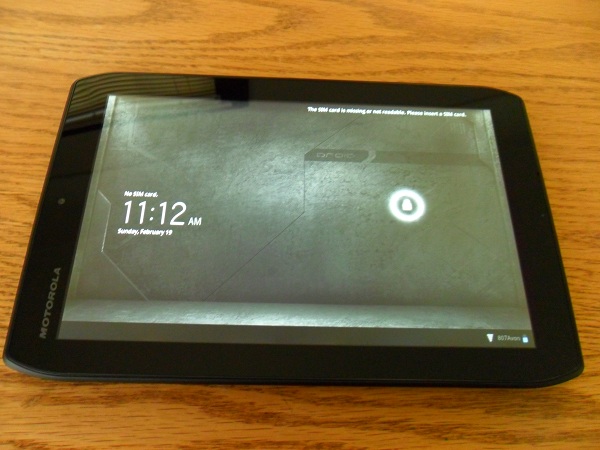
Quick Review: Motorola Xyboard 10.1

The new Droid Xyboard is a beast of a tablet. Motorola’s newest tablet runs on Verizon’s super-fast 4G LTE Network, it runs on Android’s 3.2 Honeycomb (4.0 Ice Cream Sandwich Upgradeable), as well as having two cameras; 5 megapixel on the back with a HD Webcam on the front, and a huge 7,000 mAh battery. All that said, can it compete with Apple’s third-generation iPad? Keep on reading for my review of the Droid Xyboard 10.1 running on Verizon’s 4G LTE Network.

Highlights

  • Verizon  – Verizon’s 4G Network is easily the fastest LTE network in the United States. In my testing around the Dallas Area, the Xyboard never dropped below 2 bars of LTE. I consistently received download speeds of around 19 MB/s and an upload speed 10 MB/s.
  • Display – The display on the Xyboard 10.1 is another high point, responding to touch input quickly and loading websites, apps and videos sharply, clearly and brightly. Unlike the iPad or the Galaxy Tab 10.1, the Xyboard has a mini-HDMI port built-in, which makes it easy to hook the tablet up to a TV set.
  • Camera – The 5.0 MP back-camera on the Droid Xyboard 10.1 is one of the best cameras on a tablet to date. The addition of the LED Flash is what makes the Xyboard’s camera stand out. Lowlight pictures were perfect – never overexposed nor too bright.
  • Software / Specs – On other devices, Android 3.2 Honeycomb always seemed to be very slow and laggy, but with the help of the dual-core 1.2 GHZ processor, the Xyboard flew through webpages, emails, apps, and homescreens. I never had an app force-quit or crash while using the Xyboard 10.1, and I credit that to Motorola by putting great specs into the Xyboard to get the most out of Honeycomb.

Lowlights

  • Size – Holding the Droid Xyboard 10.1 in landscape orientation is just fine, but when switching it over to portrait it felt awkward to hold and touch the screen. When using the iPad, the transition from landscape to portrait is seemless, but on the Xyboard it feels more like a liability.
  • Software – Honeycomb is a lowlight and a highlight of the Droid Xyboard. While it runs very fast, the User Interface is very clunky and not easily learned by all people.

Overall


This is THE best Android Tablet, no doubt about it! Great display, amazing camera, super-fast processor, and running on Verizon’s 4G LTE Network, the Droid Xyboard absolutely smokes the other Android Competition and in some ways, even the Apple iPad.

I would recommend the Droid Xyboard 10.1 for Android enthusiasts, business people, or teachers. But if you are a first-time smartphone or tablet user, I would recommend checking out something else. You can read more about and purchase the Motorola Xyboard here.

Review: Samsung Galaxy Nexus

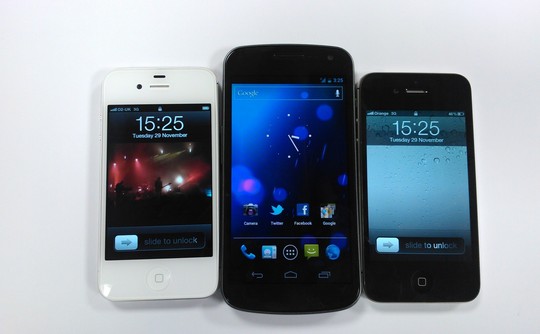
The Samsung Galaxy Nexus has a lot of bragging rights. The Galaxy Nexus was built by Samsung in collaboration with Google to create a new addition to what has already been a fantastic line of Nexus devices. The newest addition the Nexus family is as thick as Apple’s iPhone 4S, but also boasts super fast 4G LTE capability, a speedy dual-core CPU, 16GB or 32Gb of storage, 1GB of RAM, a 5 megapixel camera with 1080p HD video support, NFC chip, and Google’s newest Android software, Ice Cream Sandwich or Android 4.0, if you like.

Ice Cream Sandwich is one of the biggest steps forward in the Android Software history. Like Apple’s iOS Software, Android 4.0 unites tablet and mobile phone so they will finally run the same software. More on this in my review below.

With all these new features and very strong specs, can this be the phone to beat? How does it stack up against Apple’s iPhone 4S? Or what about Microsoft’s Windows Phone 7? Lastly, is the Galaxy Nexus worth all the hype? Find out for yourself in my review below!

Hardware / Design

  • Packaging & Accessories

Samsung knows how to package their products perfectly. The box of the Samsung Galaxy Nexus is just the like the device itself; sleek and unassuming. It isn’t too hard on the eyes, but it will rouse your intrigue and make you want to see what’s inside. After you take off the top, you come face to face with the phone itself. Unwrapping that, you have access to the earbuds, USB cord, and wall charger. Also included in the box are a Owners Manual, as well as a Tips & Tricks guide. The earbuds included with the are what you would expect coming from a mobile phone – average – nothing spectacular, nothing terrible.

  • The Galaxy Nexus

The Galaxy Nexus is a beautiful phone. The curves and the thin design of the device make the sheer size, (coming in at 5.33 inches tall by 2.67 inches wide) almost obsolete as the Galaxy Nexus weighs 0.3 pounds.

The case used on the Galaxy Nexus is a dark grey plastic. In recent products, Samsung has decided to use this plastic (instead of the metal and glass combination that Apple uses in the iPhone 4 & 4S), which is a bit of a disappointment. Holding the Galaxy Nexus in one hand and the iPhone 4S in the other, the iPhone feels much stronger and more durable than the shiny, flimsy plastic case used on the Nexus. On the front of the GN, Samsung is using a new screen named the Contour Display, which is ascribed to the slightly curved screen. The risk Google and Samsung took to create the first curved screen on a mobile phone really paid off well – the curvature of the Contour Display makes the Galaxy Nexus fit perfectly in the hand, as well as the aesthetically pleasing look.

Android’s newest emphasis on clean and simple means just that – they have kept the buttons and protrusions to a minimum. As customary for a Samsung Android device, the Galaxy Nexus has an on / off button on the right, and a volume rocker on the left. On the top of the device, you will find a speaker grille, a proximity sensor, and a 1.3 megapixel camera which is capable of recording in 720p HD video. On the back of the Galaxy Nexus, there is a 5 megapixel camera paired with a single LED Flash that is capable of recording in 1080p HD (more on this in the Camera section of my review).  On the bottom, you have a micro USB port, 3.5mm headphone jack, as well as a LED notification light, which is very out of the ordinary for Android devices. The newly placed notification center light is RGB, which means that it can create many different shades of colors depending on the type of notification you received. For example, if you got a Gmail notification, the light would be blinking blue. If you received a Tweetdeck notification, it would alert you in yellow. This may not be the biggest selling point of the Galaxy Nexus, but as I say, “It’s the little things that make someone or something great”, and that is certainly true for Samsung and Google’s newest product. Sadly, there is no microSD card slot to enter more storage into the Nexus, so what you see is what you get.

I found the plastic casing on the back of the Galaxy Nexus to be very flimsy and when I tried to take the back off to take the battery out, it seemed as if it was going to break. Putting the battery door / back of the Galaxy Nexus back on the device proved to be a challenge as well – you have to slide your fingers down the back very firmly to get it back in place.

As with the past Nexus devices, the Galaxy Nexus has stepped up the competition to a new level in terms of design and manufacturing quality. It’s not too light to be considered very fragile or flimsy, but not bulky enough to be considered heavy or burdensome. One thing that could be improved upon on the Galaxy Nexus is the back casing.

Internals / Display

Google and Samsung left little to be desired when creating the internals for the Galaxy Nexus. They added 1GB of RAM, 16 or 32 GB of memory (I reviewed the 16 GB model), a speedy dual-core TI OMAP 4460 CPU clocked to 1.2GHz, as well as the standard radios (Bluetooth 3.0, Wi-Fi 802.11b/g/n, GPS). You will also find a barometer, accelerometer, ambient light sensor, gyroscope, and compass. The Galaxy Nexus also has support for NFC (Near Field Communications) to make purchases with your phone using apps like Google Wallet or Google Offers.

I was a little bit disappointed of the quality as well as the loudness of the speaker grille on the back of the Galaxy Nexus that is be used for speaker phone, notifications, as well as listening to music or watching movies. The sound came out very distorted and was not as loud as other phones I have reviewed (more recent android phones from Motorola and HTC, as well as Apple’s iPhone 4S). Earpiece quality however was superb. Perfect sound quality and no distortion to be found. Friends and family could hear me as well as I heard them!

The Galaxy Nexus is one of the first mobile phones to have a full 720p screen. With a 1280 x 720, 4.65-inch display, the screen is definitely one of the devices biggest selling points. I had a couple of small issues with the screen though – this is also the same with most of Samsung’s recent products using the Super AMOLED Display. When the brightness was medium or below, the screen would over-hue or wash-out dark colors such as black, brown, or purple. When the brightness was notched higher, these problems were easily overcome.

Spec-wise, the Galaxy Nexus is, if not THE best, one of the best devices out right now. Aside from a few display issues, the screen on the Galaxy Nexus will blow you away. I would compare the Super AMOLED Display to that of the iPhone 4S’ Retina display. Pure eye-candy.

Battery Life / Reception

With the spectacular Super AMOLED Display on the Galaxy Nexus and the blazing fast 4G LTE, you would think the battery life would be terrible – you’re wrong. The 1750 mAh battery will easily last a moderate to normal user a full day of video-chatting, surfing the web, writing emails, you name it. Although for the heavy user, I would recommend turning off 4G and getting a spare or extended battery. I would normally hit the 20% battery left notification around 5:00 PM after turning the phone on at 9:00 AM using 4G LTE.

Verizon Wireless has been known for their blazing fast 4G LTE speeds as well as great reception all over the United States – in Dallas, the 4G LTE speeds are some of the fastest in the United States. Most of the time I had three to four bars and rarely did I hit or go below two.

Call quality on the Galaxy Nexus is second-to-none. There was no distortions or problems of any kind while both talking and listening to people on the other end of my calls.

Camera

When launching the Galaxy Nexus, Google was trying to compete with Apple and the iPhone 4S, Nokia and Windows Phone 7, as well as some other phone manufacturers for Android such as HTC or Motorola. Most of the devices listed above have a 8 megapixel camera; The Galaxy Nexus has a 5 megapixel camera. Sure, the camera software on the Galaxy Nexus is great, but that can’t make up for it’s average lens.

Here are some sample images I took with the Galaxy Nexus. (Click on the images to see them in full size.)

As you can see in the pictures above, the Galaxy Nexus’ pictures are of very low quality, but, if you happen to forget your real camera, the Galaxy Nexus would do just fine. Just don’t expect it to take printable-quality photos. Though if you compare it to other leading mobile phone manufacturers, the Galaxy Nexus is using what would be acceptable last year, today.

For the video camera on the Galaxy Nexus, it can capture great 720p and 1080p recordings, though the quality suffers from the same issues as the still camera. Not enough optics. Google also added live effects to the Galaxy Nexus video camera. It focuses on a person, then can make their head bigger, smaller, it can change the backdrop of your subject, as well as making bug eyes, alien heads, and such. Not very useful features, but it shows what the Galaxy Nexus can do.

Software

With the introduction of Ice Cream Sandwich, Google is making a big, important step forward in the evolution of Android. Like I said before, it isn’t always about the hardware.  The new Operating System is a huge leap in functionality as well as UI and finish, and it’s nothing like any Android you know (or knew).

Almost every piece of the operating system, from the homescreen to the built-in apps, menus, and even widgets has been redesigned. That also goes for the font in the OS, which is a custom typeset named Roboto. I happen to think the new typeface is a welcome, clean addition to Android, and a big improvement over the old Droid Sans face.

Starting at the lock screen, things are very different. Google has added two new smart, useful tweaks to the Galaxy Nexus lock screen. The ability to unlock the phone using the front-facing camera to scan your face, conveniently named Face Unlock, as well as the option to jump right into the camera application directly from the lock-screen. Unfortunately, if you have a password or Face Unlock set up on the Galaxy Nexus, you cannot use this new feature.

Notifications have been cleaned up and tweaked too. Now you can access your notifications from the lock screen (given that you don’t have a password set), but you can also individually swipe messages or alerts to clear them. There’s also a convenient settings icon in the notification window, which will jump you directly in the settings app to  turn on wifi, change your password, or add a new email account.

When you hit the homescreen, you’ll see a the very familiar setup of five main screens, but with new navigation elements along the bottom. Going from the bottom up, you have a row of the on-screen buttons, then a customizable dock for your favorite apps or folders, plus a center button which brings you to your app and widget drawer. While flicking through your homescreens, you’ll realize that Google Search is now at the top of every single one. A subtle, yet very nice addition to the homescreen.

You can now make folders of apps by simply dragging one icon onto another, then to open it, all you have to do is tap on the folder icon. It’s very much like Apple’s iOS in that sense.

Opening the app drawer, you can easily access all your applications and widgets by swiping right-to-left. Again, much like iOS.

Menus, Settings, and lists have been changed as well and now it’s a lot easier to find the wifi or airplane mode toggles you’re looking for without hunting through many lists or menus.

Navigating through every screen on the Galaxy Nexus is buttery smooth. There’s no lag, no stutter. Animations are fluid, and everything feels fast and sleek. It’s like Ice Cream Sandwich is a lot more “there” than in previous versions of Android.

One last big piece worth mentioning is the vast change to multitasking in Ice Cream Sandwich (ICS). Previously, multitasking was done by holding down the home button and waiting for a pop-up of your last few apps to appear. Google has changed all of that in ICS by providing a dedicated “Multitask” button in your virtual button list on the bottom of the screen. When using this new multitasking system, you will see the app icon, as well as a screenshot of the screen you were in when you last used the app. To clear an application from this new multitasking center, much like the notification center, you swipe left-to-right on the app icon/screenshot.

The main reason for Google’s drastic redesign of the Android software is for reducing the clutter and confusion from past versions of Android. I would say Google has accomplished that in the new Ice Cream Sandwich. That’s not to say that there aren’t still some hiccups here and there, but generally Ice Cream Sandwich feels like a modern, elegant operating system that’s been thoughtfully designed.

Overall

The Galaxy Nexus is the best Android smartphone ever made! It’s one of the best smartphone’s out now, and with a couple of minor tweaks (particularly to the camera), it could be the best smartphone ever produced.

The hardware is elegant and smartly designed. The software is beautiful and useful. Google has changed a lot of the bad, and replaced it with a vast amount of good. It’s faster, smarter, and a lot more friendly than any of its ancestors. Ice Cream Sandwich easily gives iOS and Windows Phone a run for their money, and in some ways, it’s a superior operating system than either of them.

If there’s something wrong with the Galaxy Nexus, it would be the camera/video camera, as well as the sheer size of the device. Comparing the camera to the competition, the Galaxy Nexus just doesn’t stack up in hardware and in photo or video quality. Also, most people find the size of the Galaxy Nexus to be overbearing or too big for their hand. Both of these things can be easily fixed and hopefully in the next Nexus device, we will see those changes.
Review: HTC Rezound

Every few months we see a new feature or hardware introduced on a phone that represents a new standard, a new criteria that future phones in the high end line must have or they will not succeed. If you look back through the years, you can build a list: the front-facing camera, the gigahertz processor, HD video capture, the WVGA display, the dual-core processor — all things that set a new standard for mobile phones. While not always important standards, these kinds of features force manufacturers to step up their game and move forward.

Today, the must-have feature is now the 720p display. Just last year a WVGA resolution was perfectly acceptable on a $200-plus smartphone!

HTC’s Rezound for Verizon is the very first of a wave of 720p phones to hit the market. As you might expect, its price ($299) and the long spec sheet are just as considerable as the display: 16GB of storage, 1GB of RAM, an 8-megapixel camera with 1080p capture, and naturally, 4G LTE. Also, the company is quick to point out that this is HTC’s first Beats Audio device to hit the US! So is this device worth all the hype? Find out for yourself in my review below.

Hardware & Design

  • Packing & Accessories

When holding the box, you have no idea what you are holding. Verizon’s smartphone marketing strategy is very fascinating, as the boxes for its Droid branded devices tend to have loud, in-your-face packaging with a glowing red eye featured somewhere on the box, the Rezound— which isn’t branded as a Droid device (for some unknown reason) — comes in a completely black box with nothing more than a subtle “HTC” logo at one end. That’s it. No Rezound logo, no picture of the phone. Very classy, very cool, and very understated.

When you remove the outer sleeve and flip open the box, you’ll find the Rezound placed between the included Beats By Dre earbuds, one bud on either side. This part of the packaging is all black as well, which really makes the red wires of the headset pop out at you. It’s very clear that HTC believes that its Beats By Dre partnership is a huge deal, and in the consumer audio business, those red wires have become very, very iconic. If you’ve read some of my other reviews, you’ll know that I’m generally not a fan of headsets included with phones, but the addition Beats Audio may be an exception. More on that a little later.

Removing the top layer of the box’s interior reveals the remainder of the accessories: some documentation, a small pleather pouch for your Beats headset, some replacement earbuds of different sizes, and HTC’s usual USB wall charger and Micro USB cable. There’s also a 16GB microSD card included, which brings the phone’s total to 32GB between the internal and external storage — an appropriate amount considering the Rezound’s music promotion, oh, and the fact that Verizon’s charging $299 for it on contract.

  • The Rezound

At 13.7mm, the Rezound isn’t going to win any records for slim, sleek design. What’s interesting is that it launched just a few days after Motorola’s 7.1mm Droid RAZR, which is by far the thinnest LTE smartphone (and probably the thinnest smartphone) on the market. They’re both $299, and Verizon is positioning them both as very high-end devices, but their designs really couldn’t be much more different.

At first glance, you might think that the HTC Rezound is a very thick, or chunky device, but, it feels quite good in the hand. In fact, I prefer it to the Droid RAZR, which doesn’t really have any “hand-friendly” areas or surfaces.  The Rezound’s 720p screen, is at 1280 x 720 compared to the RAZR’s 4.3 Super AMOLED qHD display. If you’re familiar with HTC’s Evo 3D, the Rezound’s look and feel are very similar, right down to the red accents. Around back you’ve got a textured, soft-touch material that should prevent all slips or drops.

Other features on back include the 8-megapixel camera with dual LED flash, the important Beats and 4G LTE logos, and a well-concealed loudspeaker grille. At maximum volume, the speakerphone was really loud for calls, music, and video playback.

The entire back lifts off to reveal a vibrant red interior. As with the more recent HTC devices, the cover doubles as an antenna, and if you took the cover off of the phone the Rezound immediately went to zero bars of reception as soon as I took it off. Obviously, you won’t be using the phone without a cover, but that raises the cost of getting a replacement and complicates the job of third-party accessory makers that want to offer an extended battery kit.

Finally, that takes us to the front of the Rezound. The bezel is fairly minimal on the left and right sides of the screen, with just a hint of black chrome peeking out from the very edge. The top has a long earpiece with a dark red grille, and I think it’s a nice touch. You can make out the front-facing camera on the upper right, but you won’t be able to see the proximity or light sensors at all. Below the display, the Rezound uses red backlighting for the four capacitive buttons; like the phone’s other red accents, I really like it, but I imagine some people might prefer the more traditional white.

All in all, I like the shape, size, and feel of this phone a lot more than I thought I would. It’s heavy, solid, and relatively thick, which makes it a complete opposite of the Droid RAZR’s insane design and engineering. I think some will find the phone too heavy or too thick, but hey — that’s exactly where the RAZR comes in (and now also, the Galaxy Nexus).

Display

I can talk about the Rezound’s LTE radio, 1.5GHz processor, and Beats Audio, but really, everyone’s eyes will be fixated on one feature alone: the 4.3-inch 720p LCD screen. It’s the first phone to launch with a high-definition display in the US, and a lot of people would want to see if the new display is better than the qHD screens on some of the more recent models from Motorola or HTC.

I can sum up all your questions about this display in one word: YES! You want this screen (or something very much like it) in your next smartphone. At a very high 342ppi, the Rezound shares the iPhone 4 and 4S’ unique ability to make individual pixels all but disappear to the naked eye, but, the Rezound does so at a higher resolution and a much larger screen size than the iPhone. Compared to the PenTile qHD displays in phones like the Droid Bionic and Droid RAZR, the Rezound runs circles around them, both for clarity and accuracy.

Outdoor viewability is very good, though I was able to get the screen to wash out in bright, direct sunlight (easily fixed by placing a hand over the screen). Looking at the Rezound full-on, I found contrast, brightness, and color temperature to be very near perfect. It’s very difficult to find fault with this display.

Beats Audio

I had to find out of the included earbuds are any good. I should point out that these are not the high-end Beats By Dre Tour model, but, they appear to be pitch-perfect copies of the company’s $100 iBeats. They fit in my ears very well, were comfortable to wear at length, and can be customized to fit your ears’ needs with the included pack of replacement buds.

The audio quality for earbuds is amazing! When you play music through the built-in Music app, a Beats logo appears in the status bar — this is your cue that the phone is running the Beats By Dre Mode, and it makes the output sound much “bigger and better.” All of my music sounded very good and, in all honesty, much better than I expected.

Cameras

I was really delighted with the Rezound’s camera interface, which is snappy, very pretty, and easy to use — it’s the same one that HTC employs on the Vivid and other recent devices, and it’s apparent that the company put some serious thought into how it should work. Autofocusing is fast, as is  the shutter speed, and I found that I could really get up close with macro shots — about an inch and a half. I was once again disappointed here with the lack of a two-stage (halfway down for focus; full click for camera shot) hardware shutter button, but it seems like this is a feature that manufacturers are trying really hard to move away from for some reason.

I wasn’t blown away by the quality of either the 1080p video or the 8-megapixel photos when blown up to full size — there appears to be quite a bit of compression noise. It’s okay for messaging use and perhaps a wallpaper, but I wouldn’t replace either your point-and-shoot or your HD camcorder with the Rezound.

The front-facing camera is actually quite good, producing stills far cleaner and clearer than they realistically need to be for the intended duty (video calling, primarily). Like the Vivid, it’ll also let you record 720p video up front.

Wrap-up

The Rezound will likely go down as one of the best Android phones ever to launch pre-Ice Cream Sandwich — it’s incredible display, coming loaded with the LTE modem and beefy processor, is simply too great to ignore. If you’re looking for a phone with HTC Sense UI, blazing fast Verizon 4G LTE, and an amazingly fast processor, look no further than the HTC Rezound.